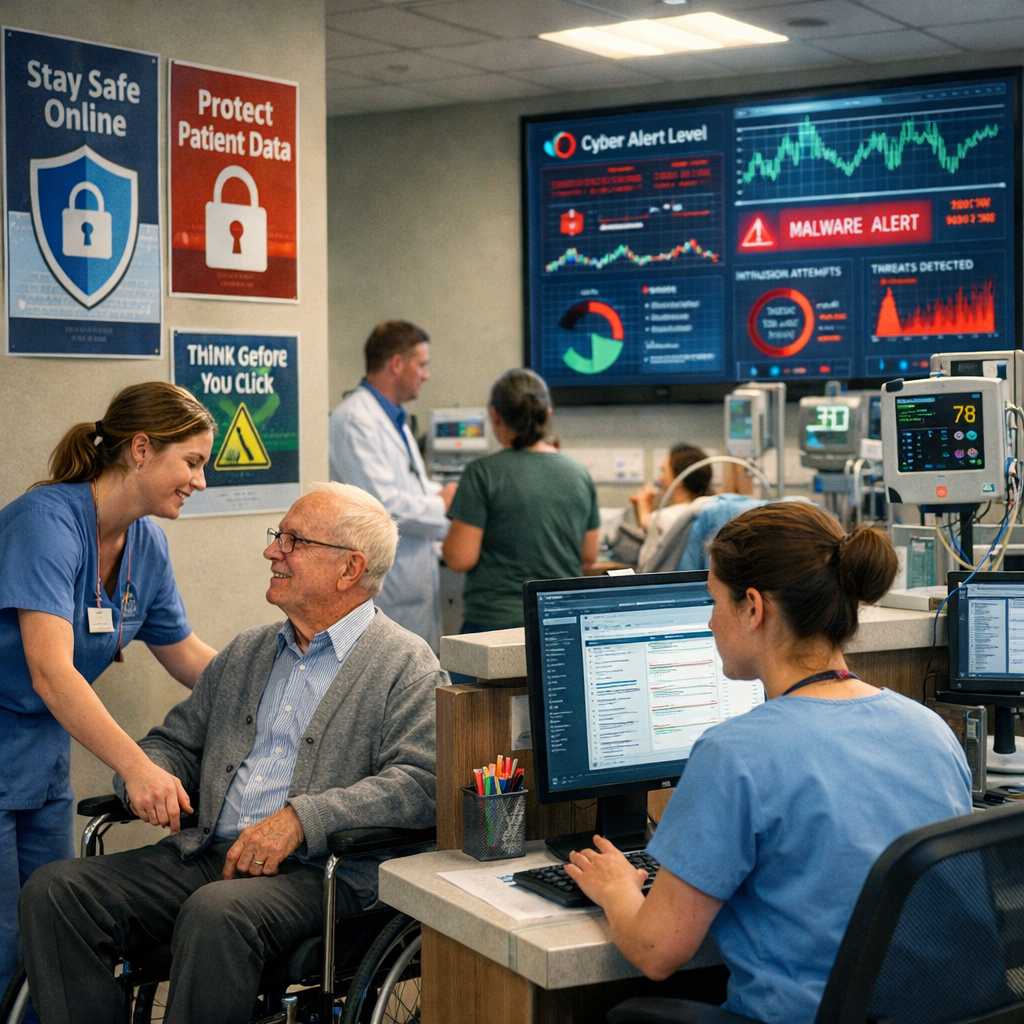
The healthcare industry is facing an unprecedented surge in cybersecurity threats, as attackers increasingly target organizations to disrupt patient care. Healthcare systems are especially vulnerable because they rely on technology around the clock and store highly valuable patient data, all while managing a complex mix of legacy systems, cloud platforms, and connected medical devices. Let’s explore the current cybersecurity landscape in healthcare—and the proactive steps organizations can take to stay protected.
Understanding Ransomware Attacks
Ransomware remains one of the most severe and disruptive cybersecurity threats in healthcare. These attacks can force entire organizations to shut down, jeopardizing patient care and delaying critical services. Healthcare facilities are particularly at risk because they depend on continuous access to electronic systems and maintain sensitive records that are highly valuable to cybercriminals.
A recent cyberattack on major medical device manufacturer Stryker—claimed by an Iran‑linked hacking group—caused widespread network disruption and temporarily locked employees out of critical systems. Although not a ransomware attack, the incident underscores how vulnerable healthcare‑related organizations remain to geopolitical cyber threats. For hospice providers, it’s a powerful reminder that even indirect partners in the medical supply chain can become targets, creating downstream risks for patient care continuity and data security.
Ransomware is a form of malware that blocks access to a computer or data system until a ransom is paid. Attackers often use tactics such as phishing emails, malicious links or attachments, and compromised remote access tools to infiltrate systems.
As ransomware threats continue to grow, organizations are adopting more advanced strategies to defend against them. One such tool is a honeypot environment—a decoy system designed to attract attackers and gather intelligence about their methods.
Equally important is employee education. Healthcare organizations must train staff to recognize phishing attempts, use multifactor authentication (MFA), and follow safe digital practices to reduce the likelihood of an attack.
The Importance of Backups and Disaster Recovery in Cyberattacks
Immutable backups allow organizations to restore data without paying a ransom, even though recovery can still take time. Implementing strong backup and disaster recovery strategies ensures that critical information remains accessible during and after a cyberattack.
Endpoint Detection and Response (EDR) tools also play a key role in healthcare cybersecurity. EDR solutions monitor, detect, investigate, and respond to threats on endpoints such as laptops and servers. While many medical devices cannot run EDR software directly, EDR is essential for protecting the broader healthcare network. One widely used EDR solution is Microsoft Defender for Endpoint.
HIPAA Compliance Helps Reduce Cybersecurity Risk
HIPAA compliance helps reduce cybersecurity risk by enforcing essential standards for data protection, including encryption, access controls, auditing, and continuous monitoring. While HIPAA is not a complete cybersecurity framework, it establishes foundational safeguards that help protect patient information and reduce exposure to cyber threats.
Ransomware Trends 2026: Healthcare, Defense, and Threat Actor Tactics - Cyberwarzone
How to Prevent Ransomware Attacks in Healthcare IT - Hosting & Cloud Solutions - HIPAA Compliant - HIPAA Vault